
Back to main portfolio
Devis Wawan Saputra
Portfolio

Learning & Development

A portfolio of enterprise learning systems, academic learning design, curriculum architecture, international student development, digital workflow improvement, and quality assurance. Each project below is condensed from the original project record into a two-paragraph maximum case summary, with project evidence, reports, case studies, and supporting materials linked directly from this portfolio repository.

Rocketversity Learning Management System project visual 2
Rocketversity Learning Management System project visual 3
Rocketversity Learning Management System project visual 4
Rocketversity Learning Management System project visual 5
Project 01 · Enterprise Learning System

Rocketversity Learning Management System

Suitmedia · Internal LMS · Program lead

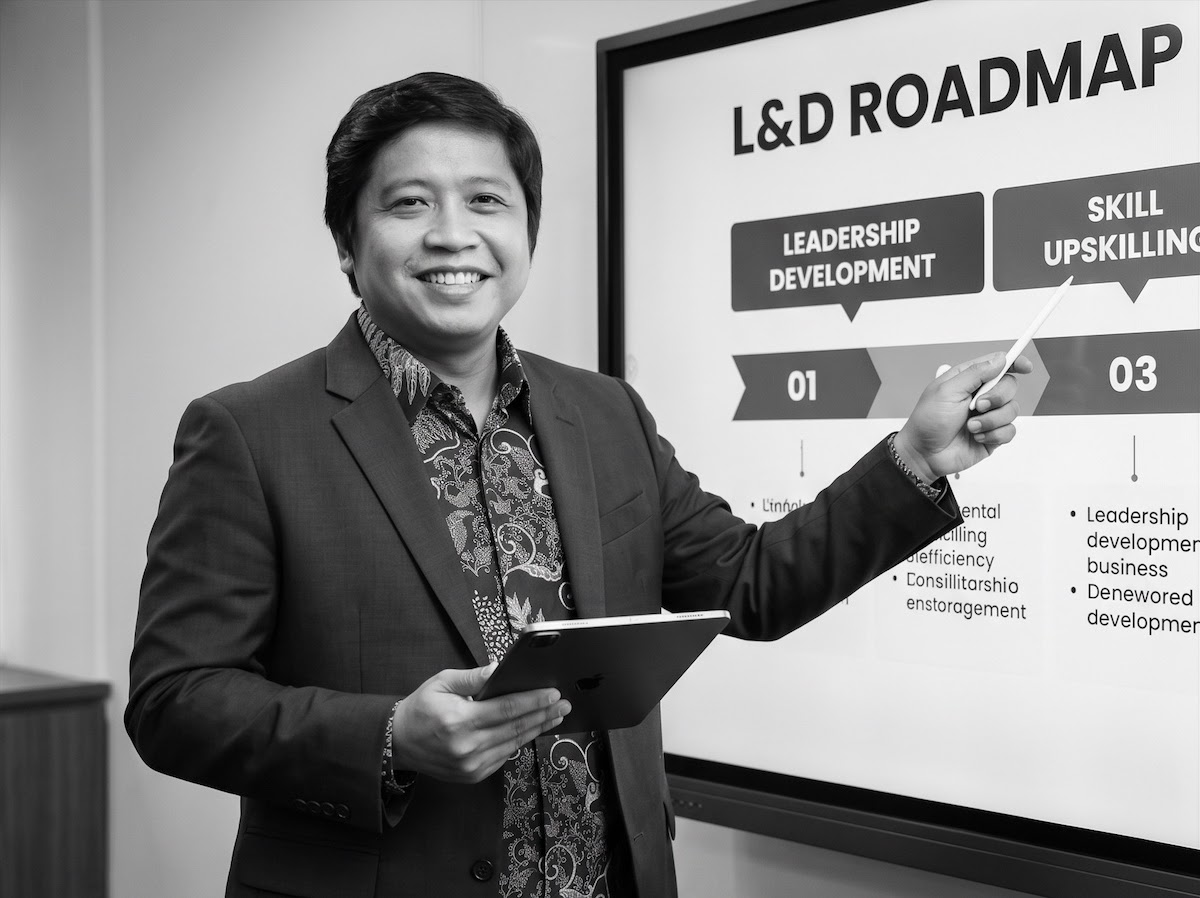
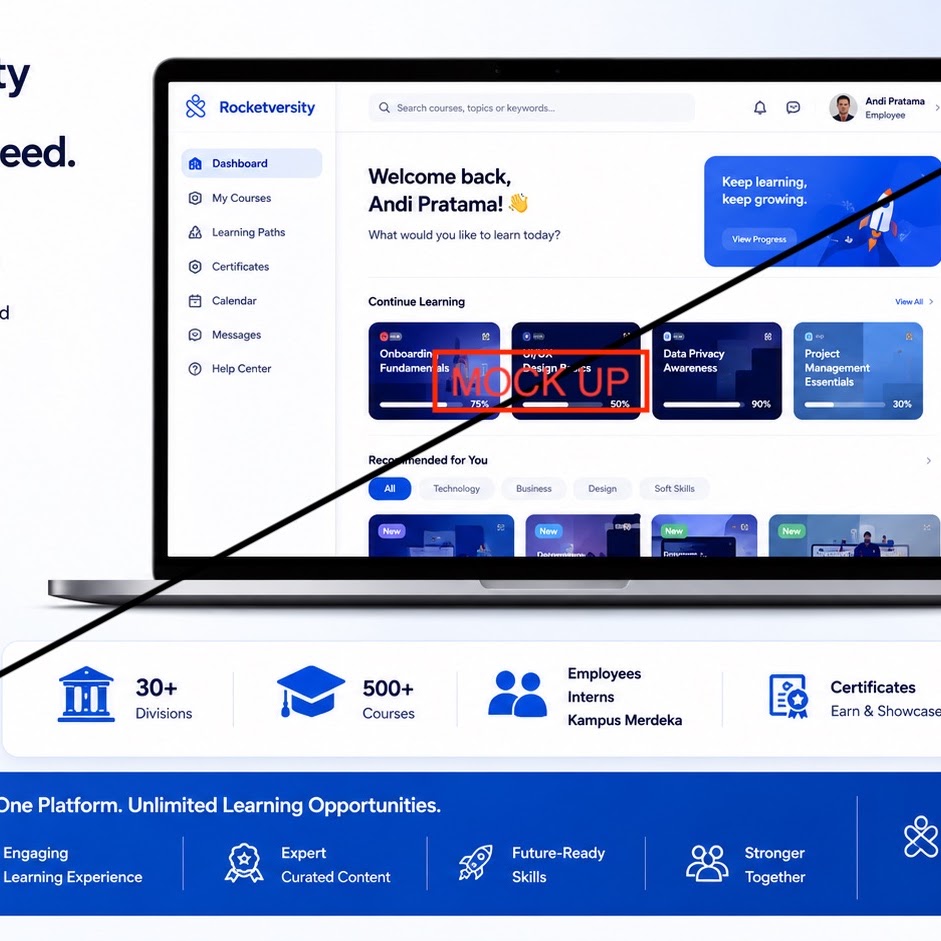
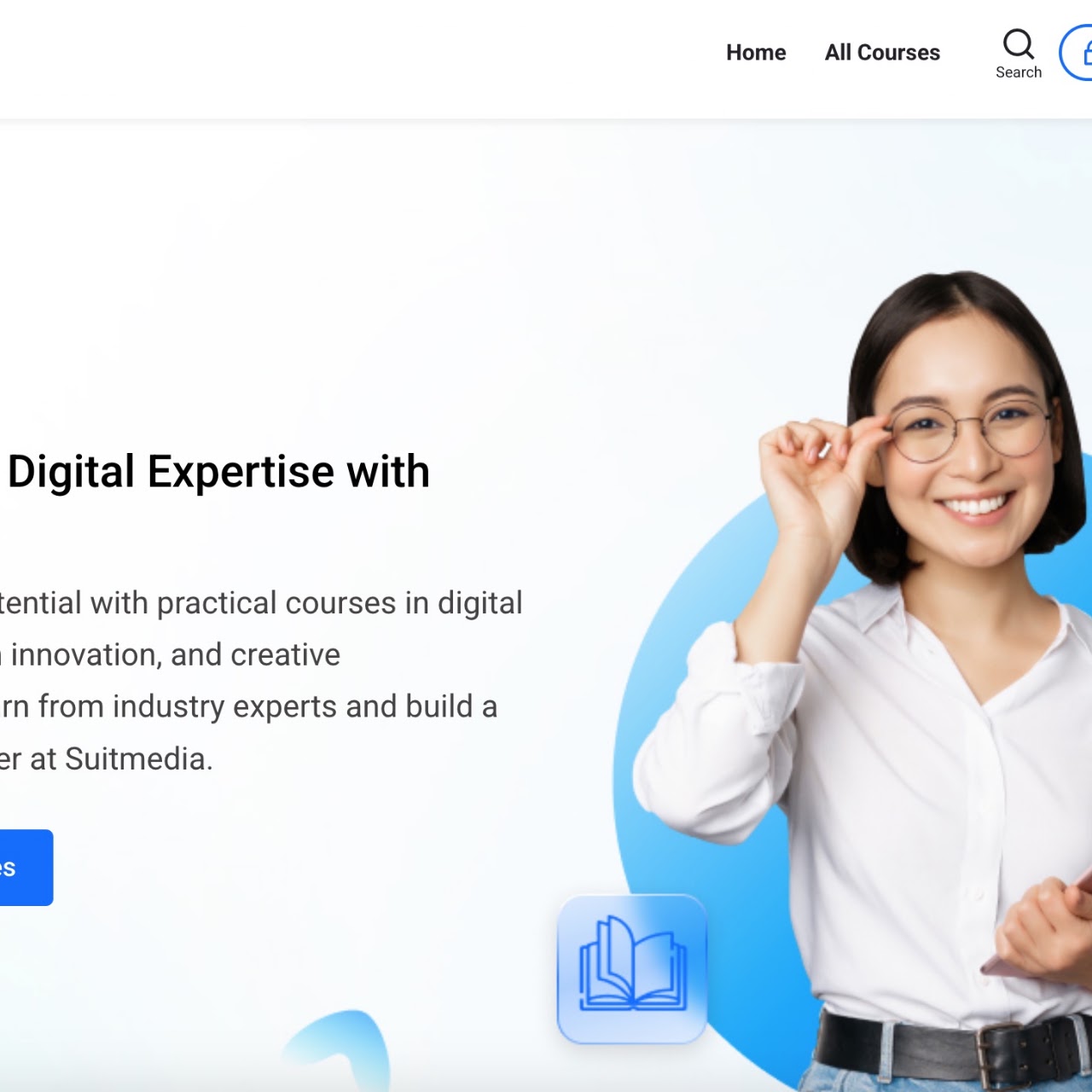
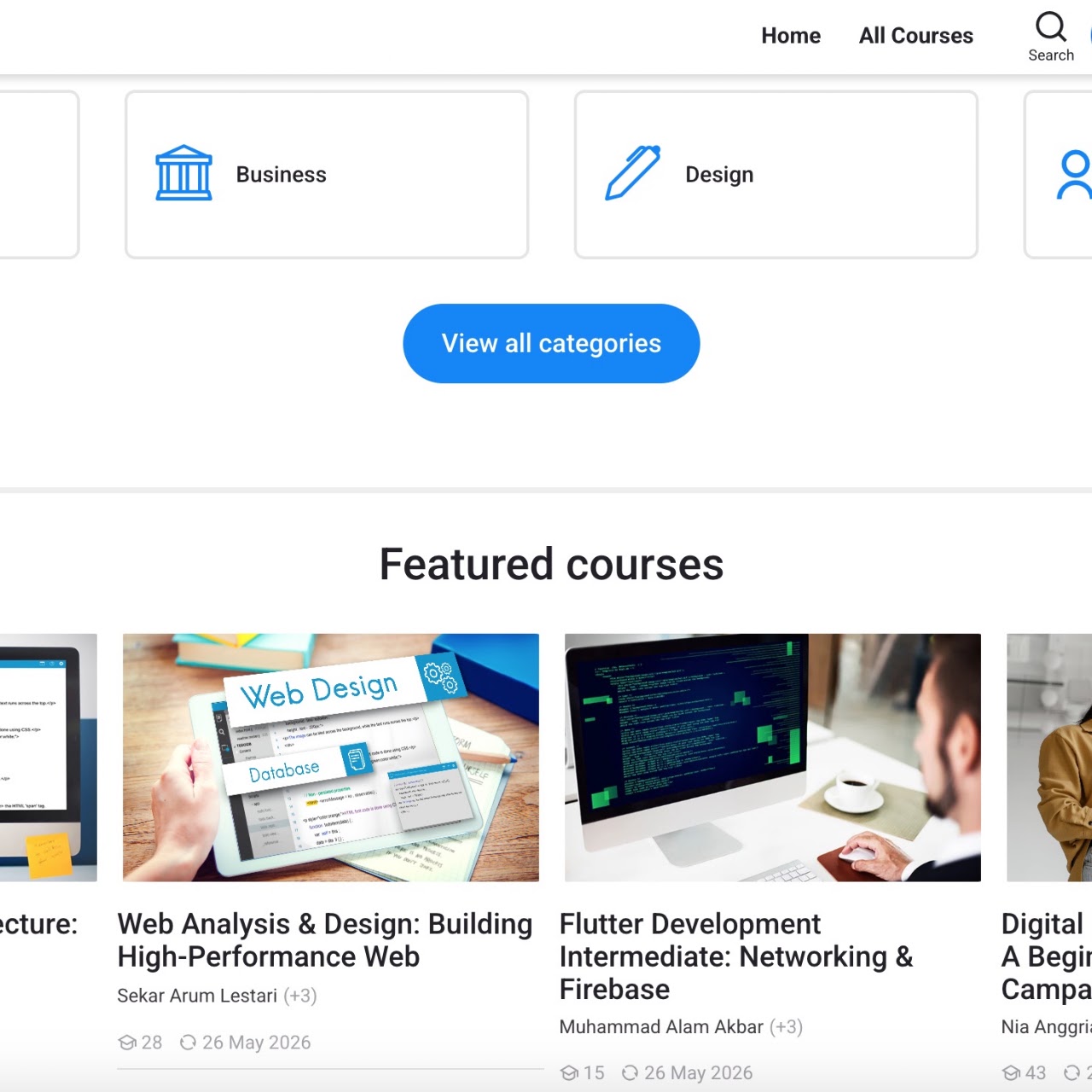
Suitmedia's onboarding and training content was scattered across departments with no central roadmap and substantial risk of duplication. I led a four-person team to audit existing material, break it into manageable learning units, build non-overlapping courses, secure manager approval, load the finalized curriculum into Rocketversity, and assign trainers from the teams that owned the content.

The roadmap was designed as a three-year progression from content collection to internal onboarding and ultimately external paid training. Within 1.5 years, 80 courses were live, around 100 employees had been onboarded through the new structure, and onboarding time had been reduced by 30%. Rocketversity remained in operation after I left the role.

80 courses live~100 employees onboarded30% faster onboarding4-person build team
THRIVE OpenSRP project visual 1
THRIVE OpenSRP project visual 2
THRIVE OpenSRP project visual 4
THRIVE OpenSRP project visual 5
THRIVE OpenSRP project visual 7
THRIVE OpenSRP project visual 8
Project 02 · Digital Health Learning Workflow

THRIVE OpenSRP

Program Manager · OpenSRP consortium collaboration · 2015

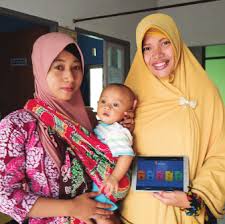
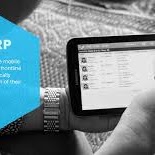
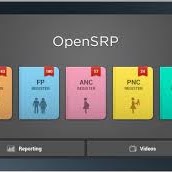
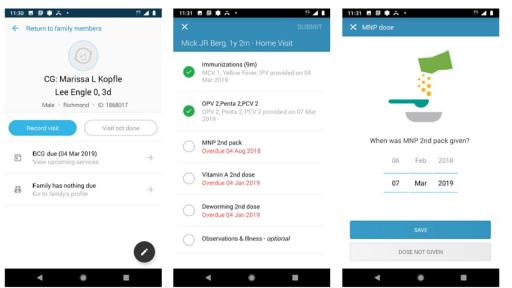
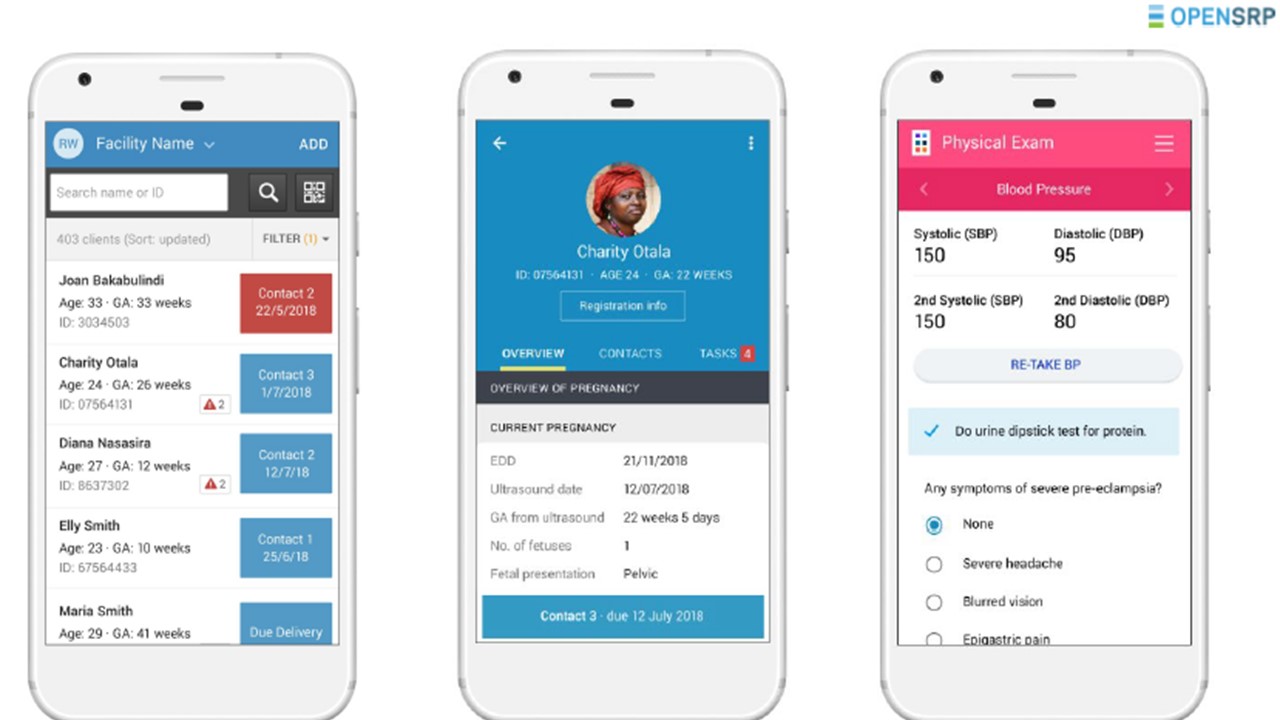
The project migrated standardized clinical intake forms used by Bidan and community health workers from paper into a mobile data-capture workflow. As Program Manager, I directed four developers and six field data collectors across 16 districts, addressing both interrater inconsistency and severe XLSForm latency through interviews, a standardization protocol with the Lombok health department, form digitization, and a structured field timing study.

Baseline load times ranged from 20 seconds to 20 minutes, with some forms failing entirely. I compiled the evidence for consortium review and deployed an interim form-decomposition solution that reduced most forms to under 10 seconds and a subset to under 5 seconds, while preserving the approved clinical content and supporting the case for a longer-term rendering-technology change.

4 developers6 field data collectors16 districts<10 sec after mitigation
ASTRA Lean Production System Lab project visual 1
ASTRA Lean Production System Lab project visual 2
ASTRA Lean Production System Lab project visual 3
ASTRA Lean Production System Lab project visual 4
ASTRA Lean Production System Lab project visual 5
Project 03 · Practice-Based Learning

ASTRA Lean Production System Lab

Institut Teknologi Del · Partnership with PT Astra

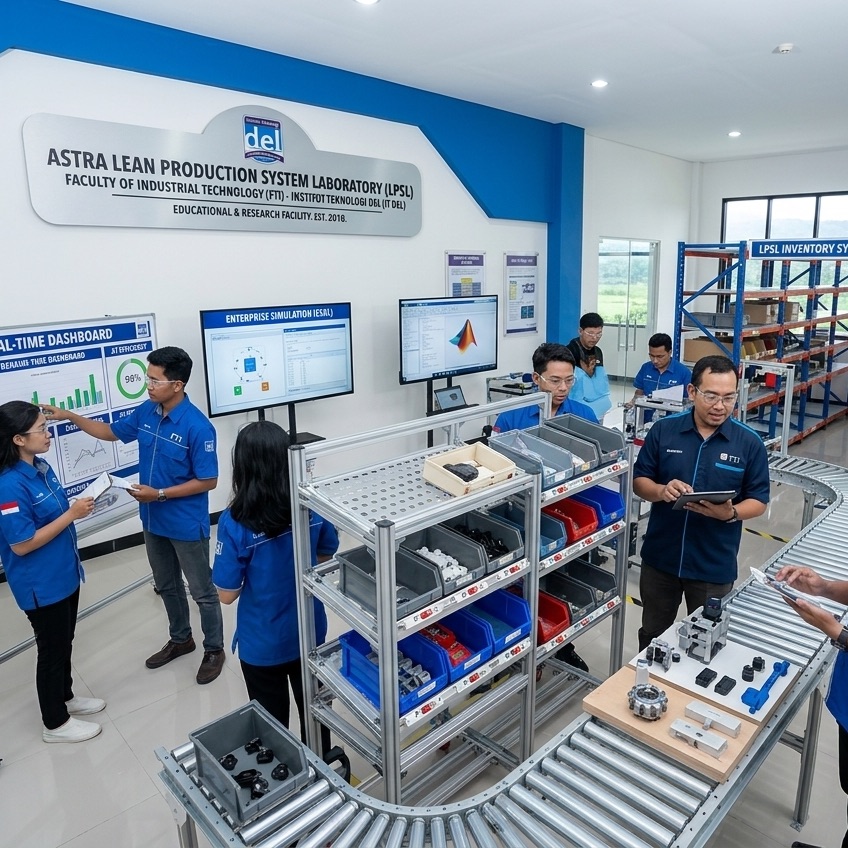
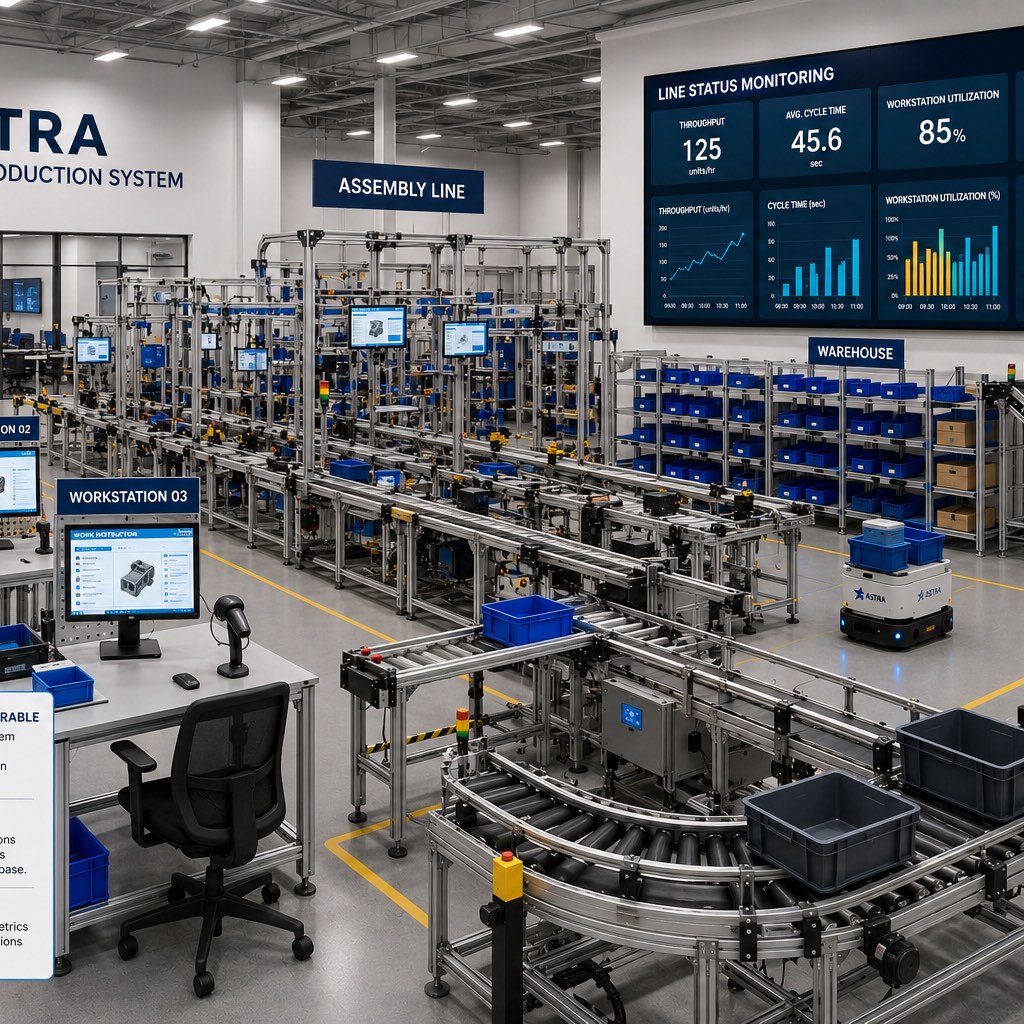
The ASTRA Lean Production System Lab was established to teach lean manufacturing through hands-on practice grounded in Toyota Production System principles, including 5S, waste elimination (Muda), Build in Quality, and pull systems. As part of the founding development team, I helped translate those concepts into practicum modules for students.

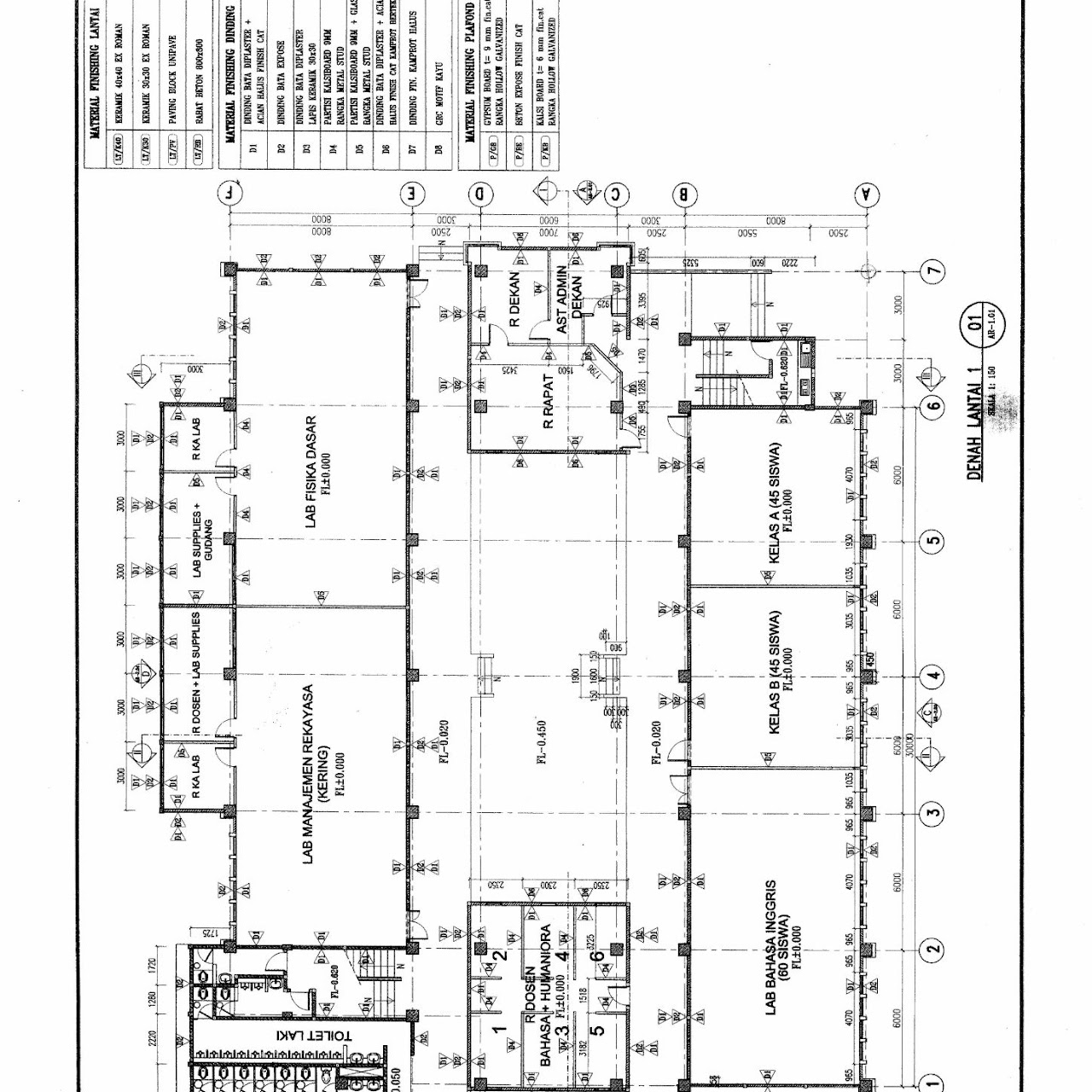
I also coordinated lab setup logistics, including budget planning, equipment procurement, and the MOU launch with Astra, connecting academic learning design with the physical learning environment required for experiential production-systems education.

Lean manufacturing5SMudaPull systems
Internship Program project visual 2
Internship Program project visual 3
Project 04 · Work-Integrated Learning

Internship Manual for Engineering Management

Institut Teknologi Del · Program Coordinator & Principal Lecturer

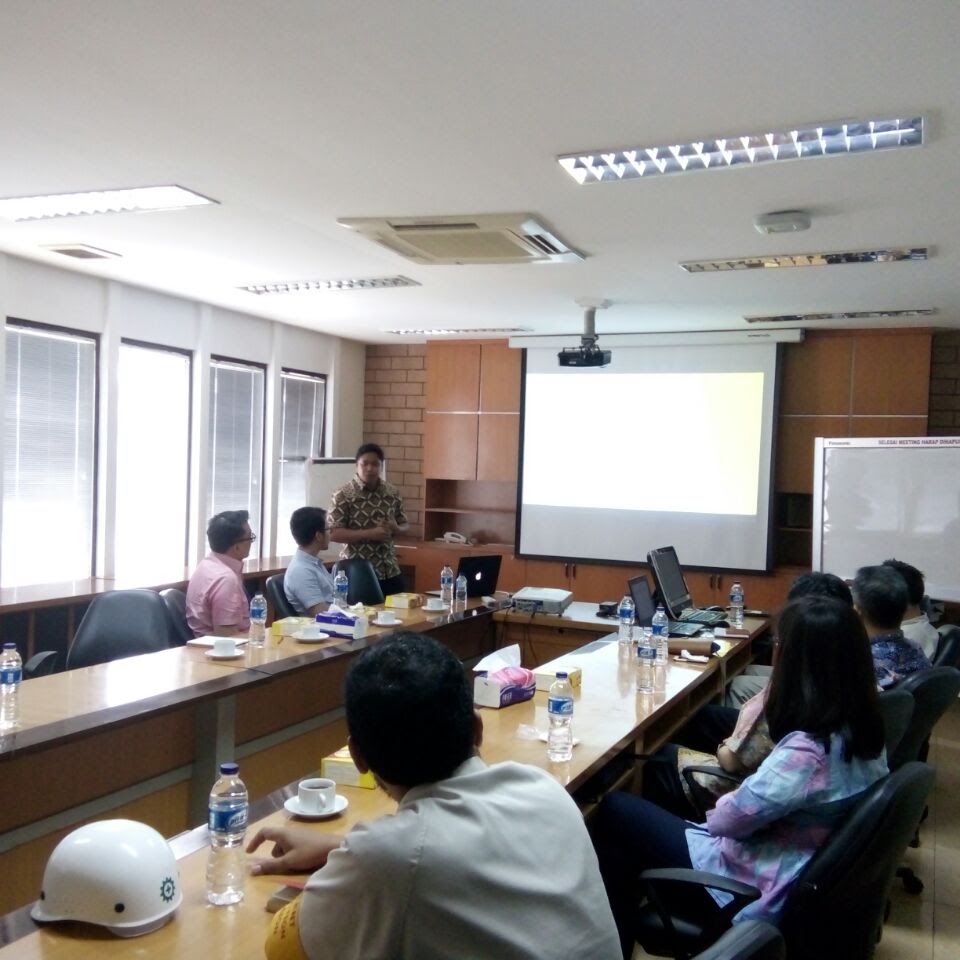
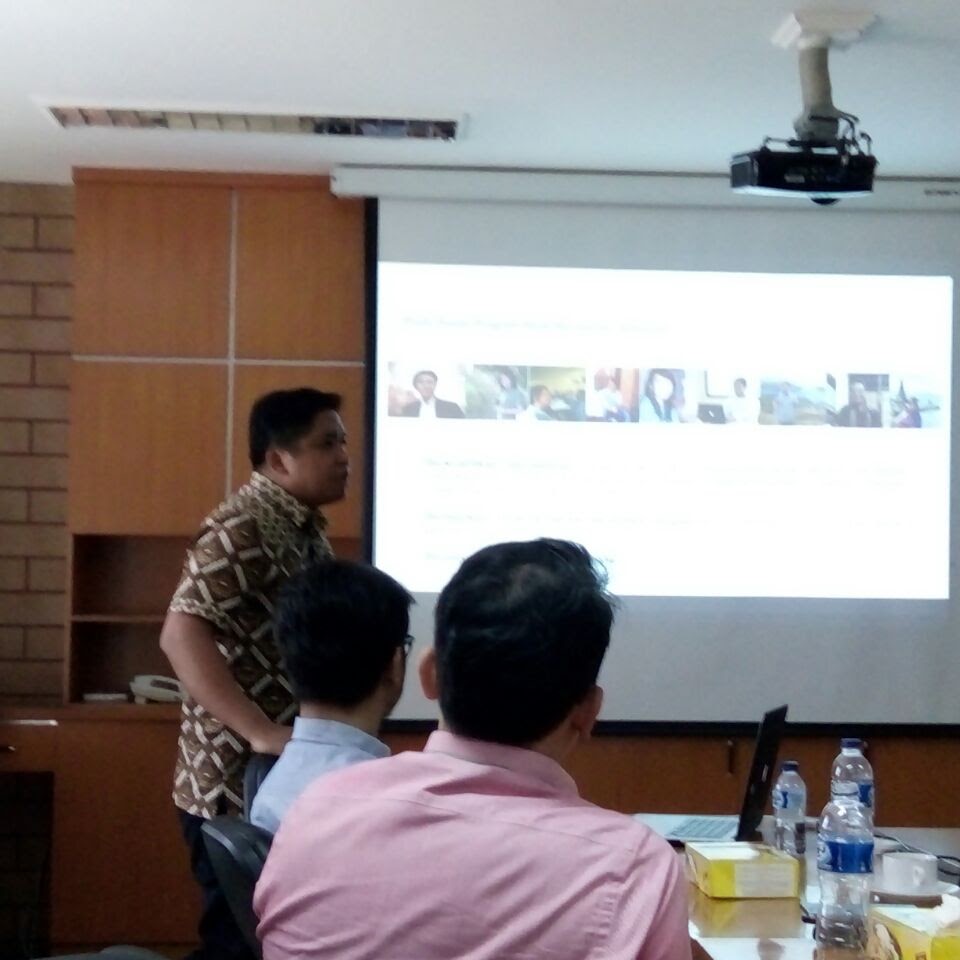
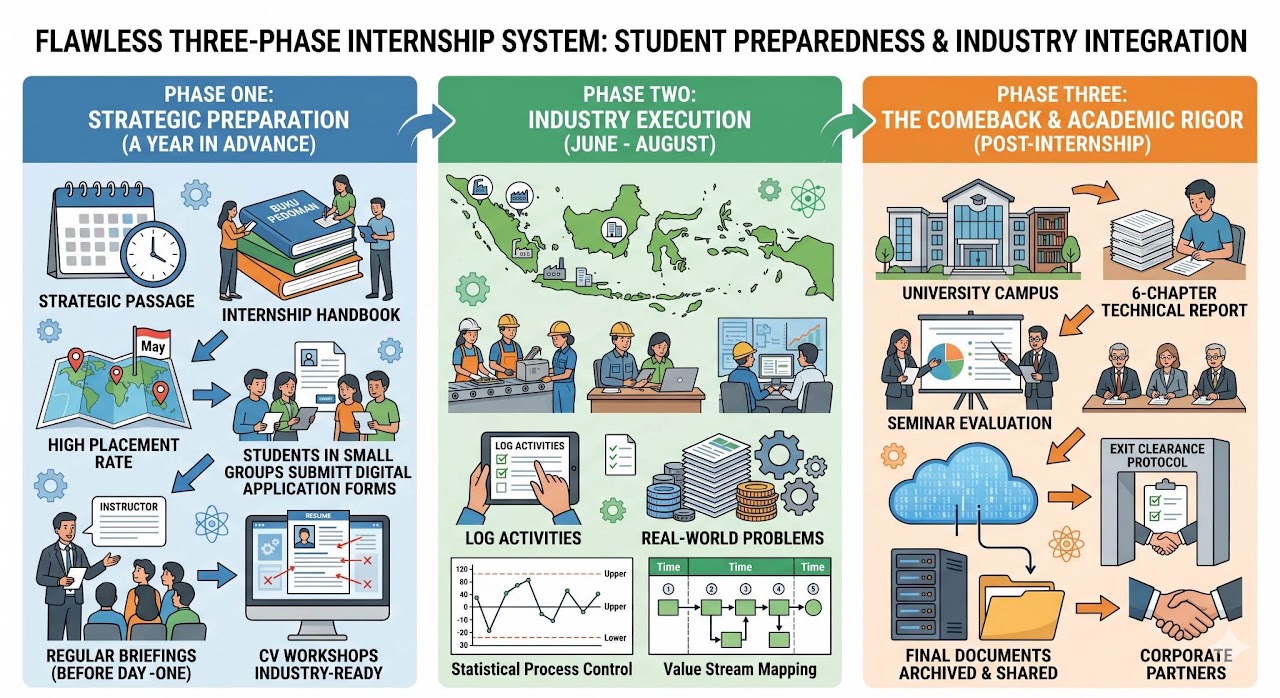
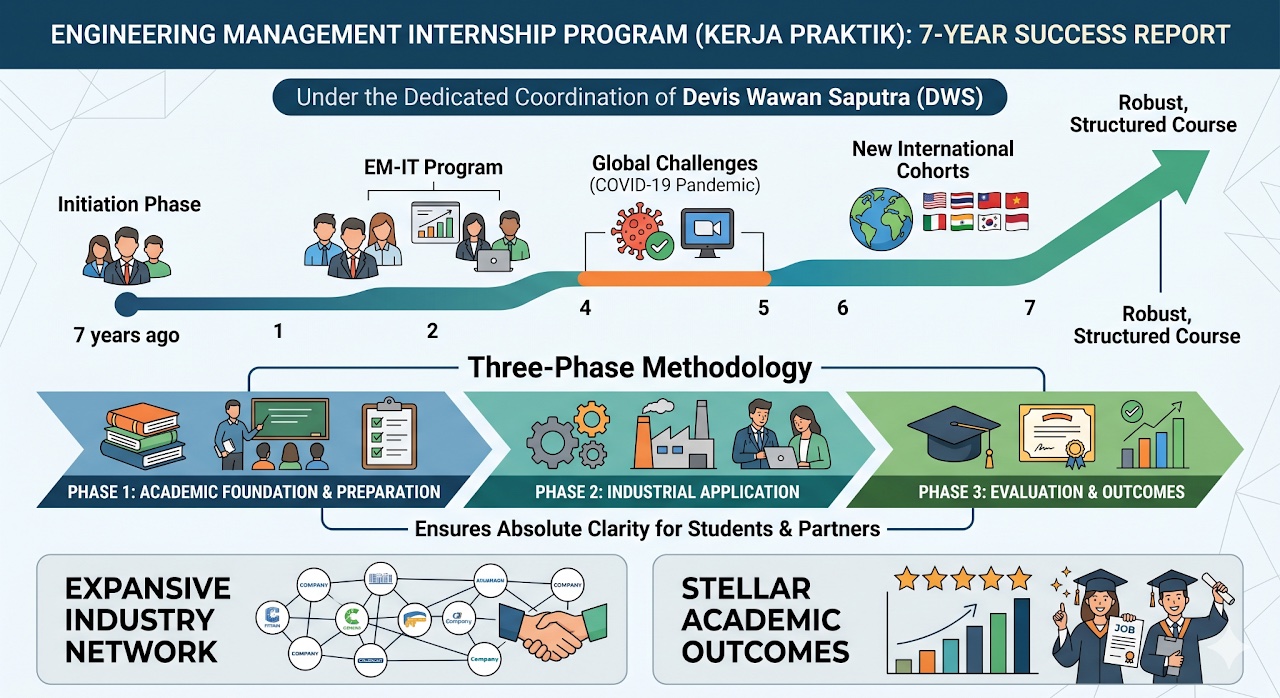
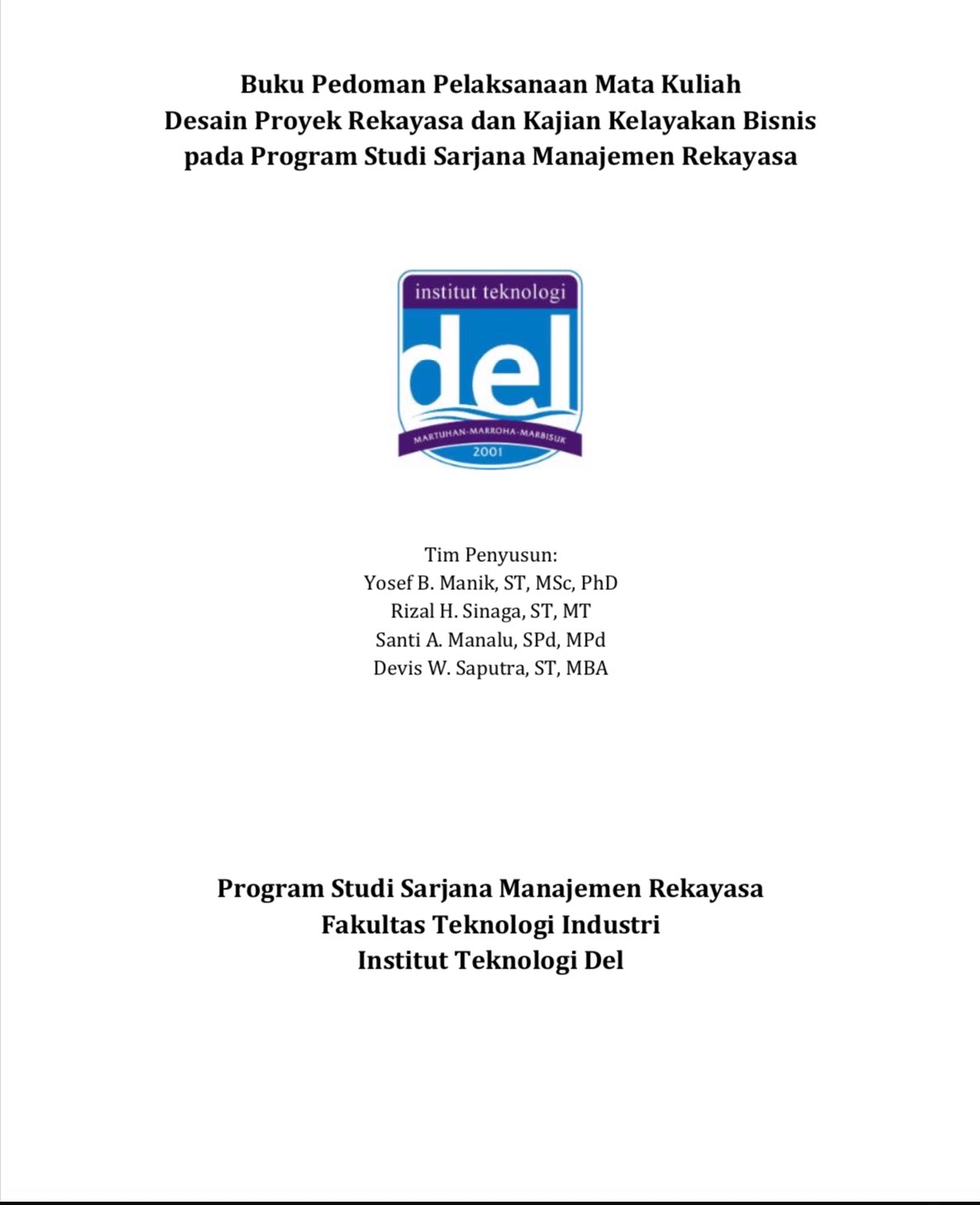
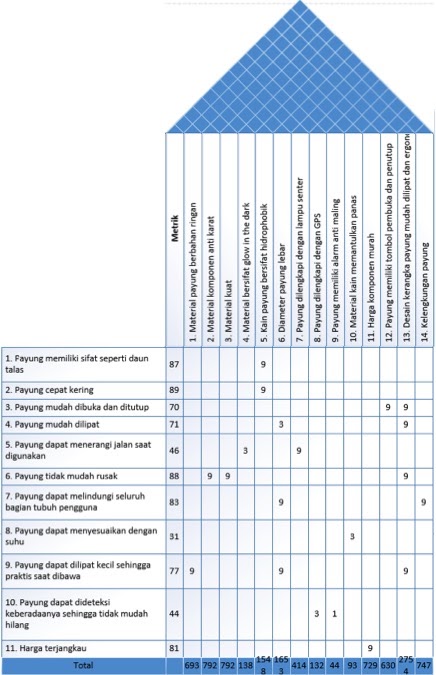
I built and ran the Engineering Management internship program as a structured bridge between classroom theory and industry practice, with placements at companies including PT Pertamina, PT Astra Otoparts, GMF AeroAsia, and PT Petrokimia Gresik. The model combined a year-long preparation phase, a dedicated handbook and CV workshops, a two-month industry placement, and a final technical report and seminar.

The placement phase encouraged students to use methods such as Statistical Process Control and Value Stream Mapping in real industrial contexts. I managed the program for seven years, steered it through the COVID-19 period, expanded it to cover the EM IT Program, and the project record reports 93% of the 2017 cohort receiving an A grade.
7 years2-month placement93% A grade, 2017 cohort
Engineering Management Manual project visual 1
Engineering Management Manual project visual 3
Project 05 · Academic Learning Architecture

Engineering Management Manual

Institut Teknologi Del · Academic reference system
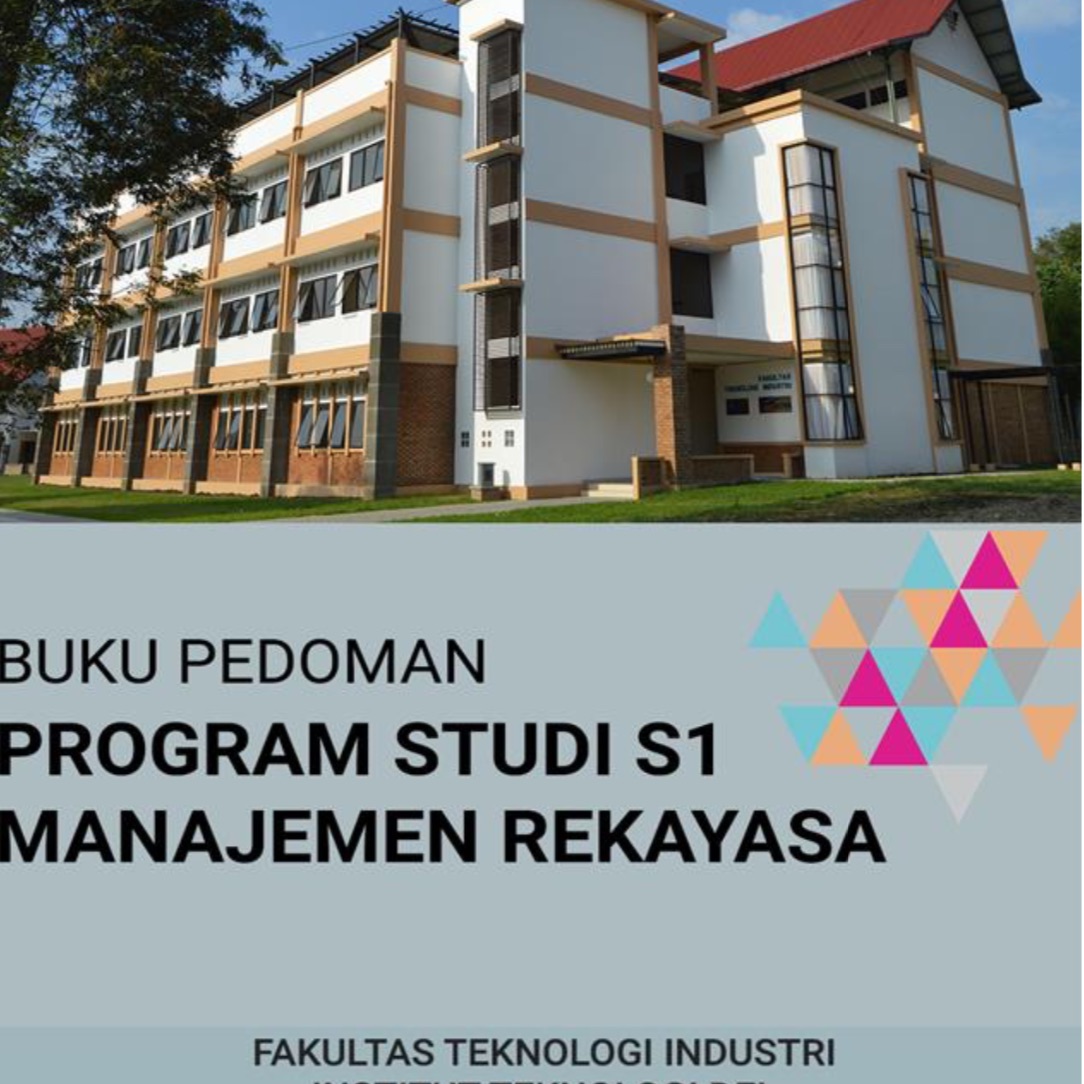
The Engineering Management Academic Manual was designed as a comprehensive reference for students, faculty, and administrative staff throughout the academic journey. It consolidates the study program's vision, mission, strategic objectives, graduate competency expectations, faculty information, facilities, and behavioral standards within the residential academic environment.

The manual also documents the 144-SKS curriculum architecture and its alignment with ABET criteria, giving the program a single shared reference point for academic expectations, progression, and program governance.

144 SKS curriculumABET-alignedStudents + faculty + staff
Technopreneurship / Entrepreneurship project visual 2
Technopreneurship / Entrepreneurship project visual 3
Technopreneurship / Entrepreneurship project visual 4
Technopreneurship / Entrepreneurship project visual 5
Project 06 · Experiential Course Design

Entrepreneurship Course

Technopreneurship (TIS3001) · Institut Teknologi Del

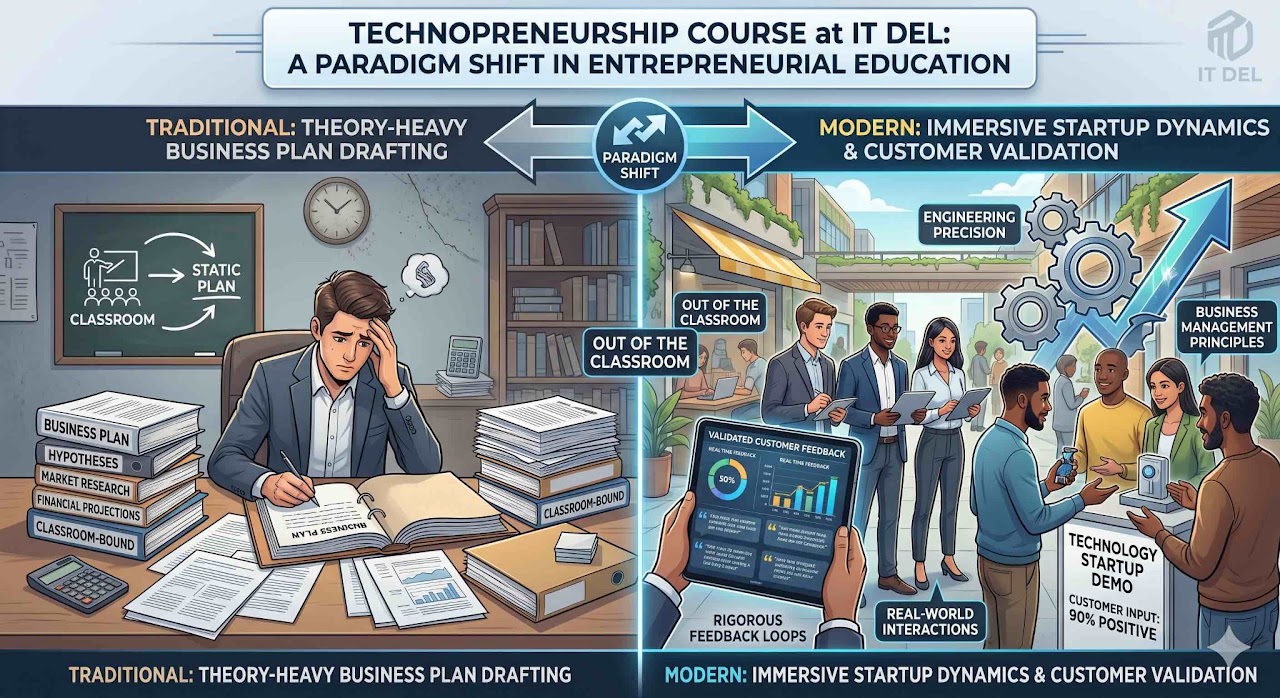
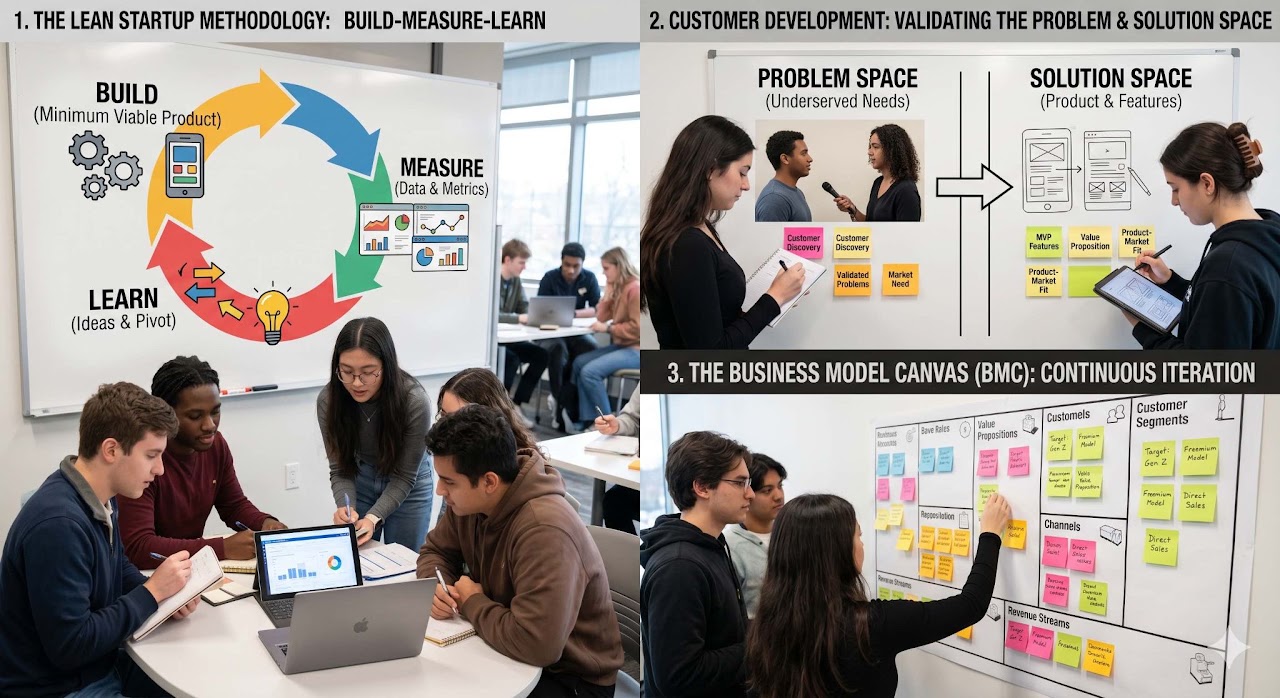
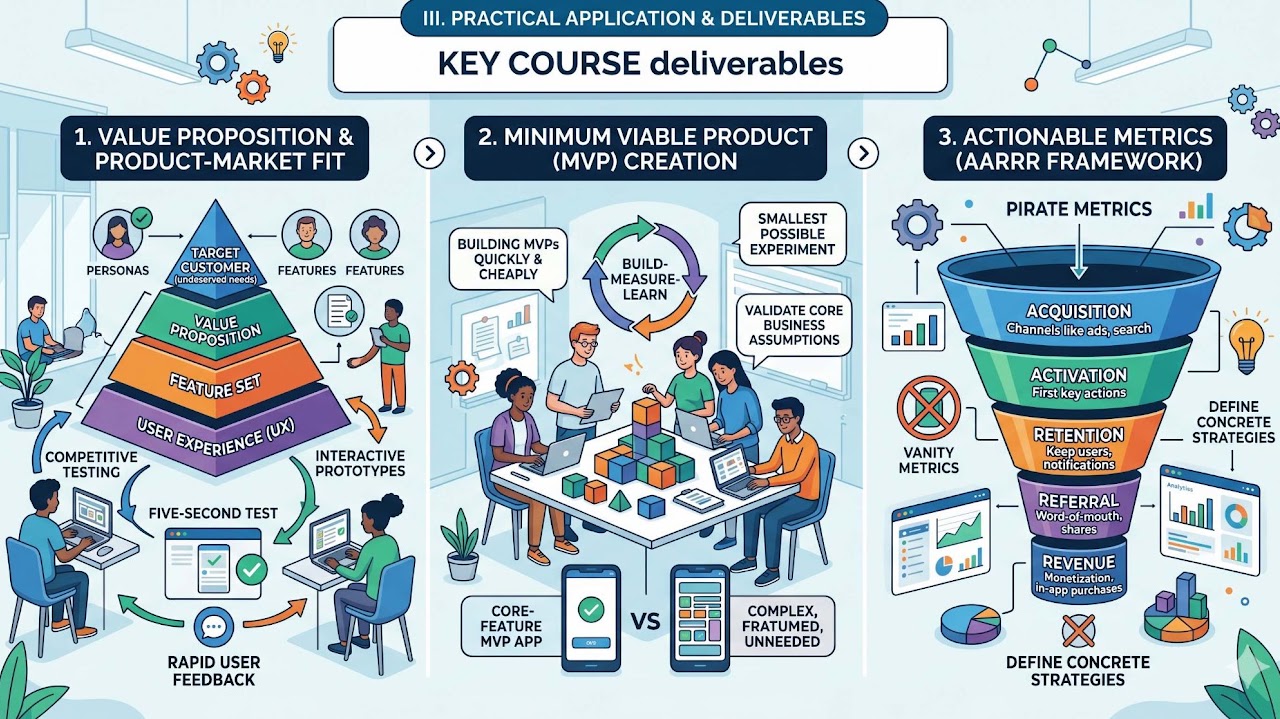
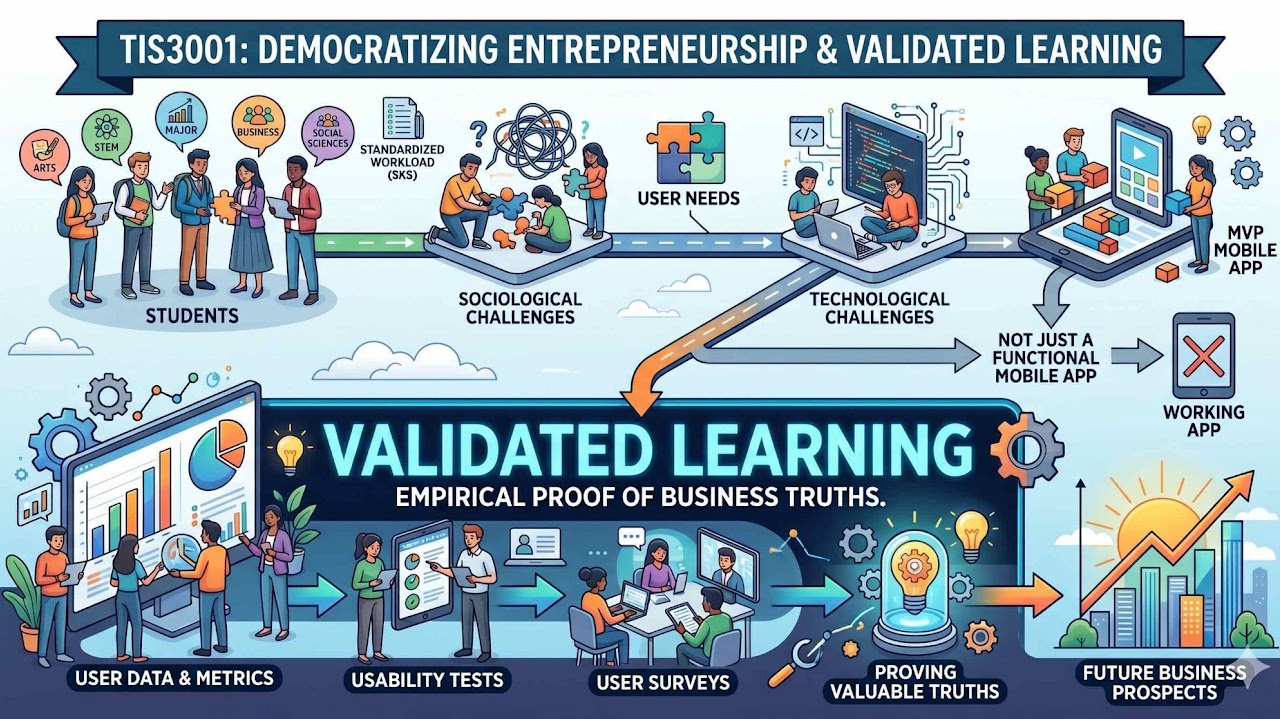
The course was designed as a practical startup simulation rather than a theory-heavy entrepreneurship class. Student teams moved through Lean Startup cycles, rapid customer discovery, Business Model Canvas development, prototyping with tools such as Figma and Canva, and AARRR funnel metrics to test market hypotheses through Build-Measure-Learn iteration.

Project tracks were tailored to the disciplines represented across campus, connecting mobile and web product initiatives for software students with specialized technical innovation in other engineering programs.

Lean StartupBMCAARRR funnelBuild-Measure-Learn
Engineering Management Curriculum Evaluation project visual 2
Engineering Management Curriculum Evaluation project visual 3
Project 07 · Curriculum Evaluation

Engineering Management Curriculum 2014–2019 Evaluation

Institut Teknologi Del · Rector-mandated diagnostic review

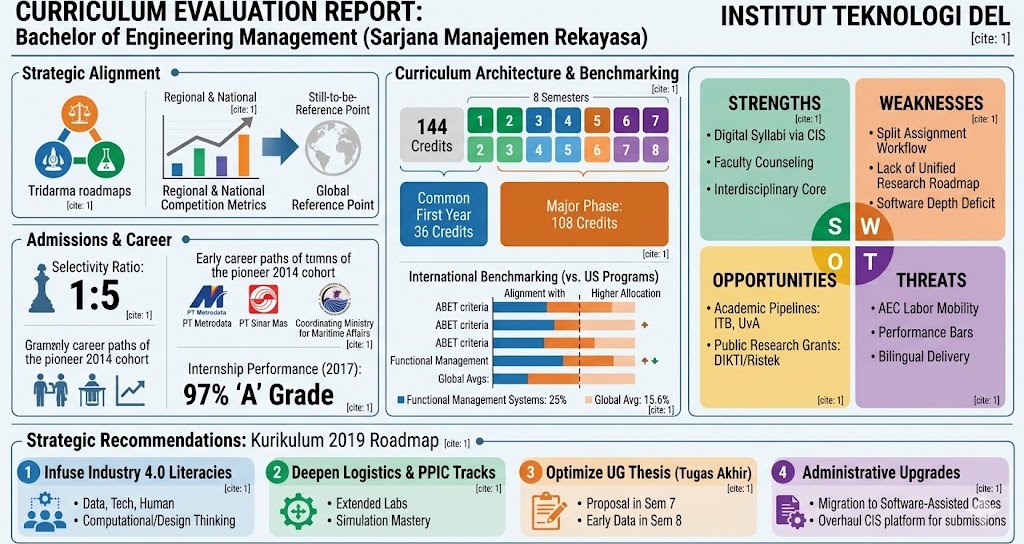
The evaluation served as the diagnostic foundation for the next Engineering Management curriculum. It combined domain-expert consultation, market-trend analysis, graduate tracer data, alumni feedback, technology-development tracking, and review against accreditation expectations including ABET criteria.

Operating under the Rector's mandate, the evaluation culminated in a formal Academic Senate presentation used to establish transition rules and secure institutional approval for the strategic updates that followed.

Expert inputTracer dataABET criteriaAcademic Senate
New Engineering Management Curriculum project visual 2
New Engineering Management Curriculum project visual 3
Project 08 · Curriculum Architecture

New Engineering Management Curriculum 2019–2024

Institut Teknologi Del · Ten-step institutional framework

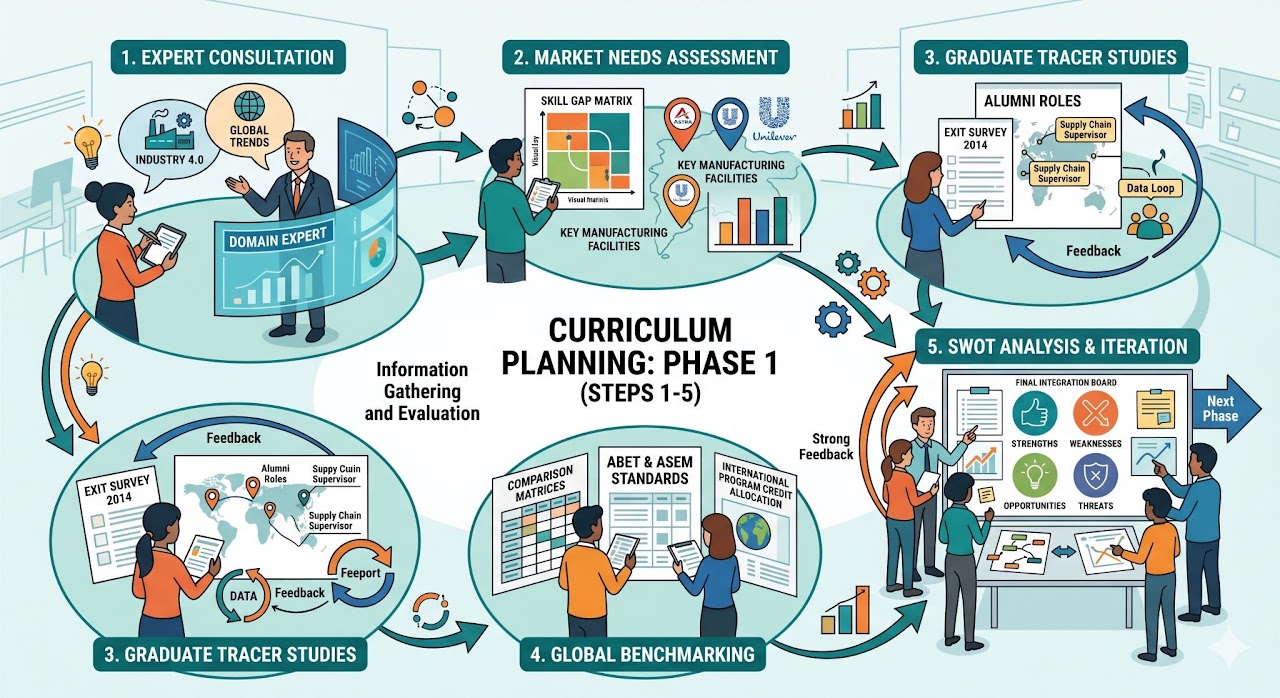
The curriculum-development framework began with a diagnostic phase: expert consultation on cognitive taxonomies and Industry 4.0, market-needs assessment across automotive, FMCG, and technology organizations, graduate tracer studies, benchmarking against ASEM and ABET criteria, and an internal SWOT analysis of the existing course structure.

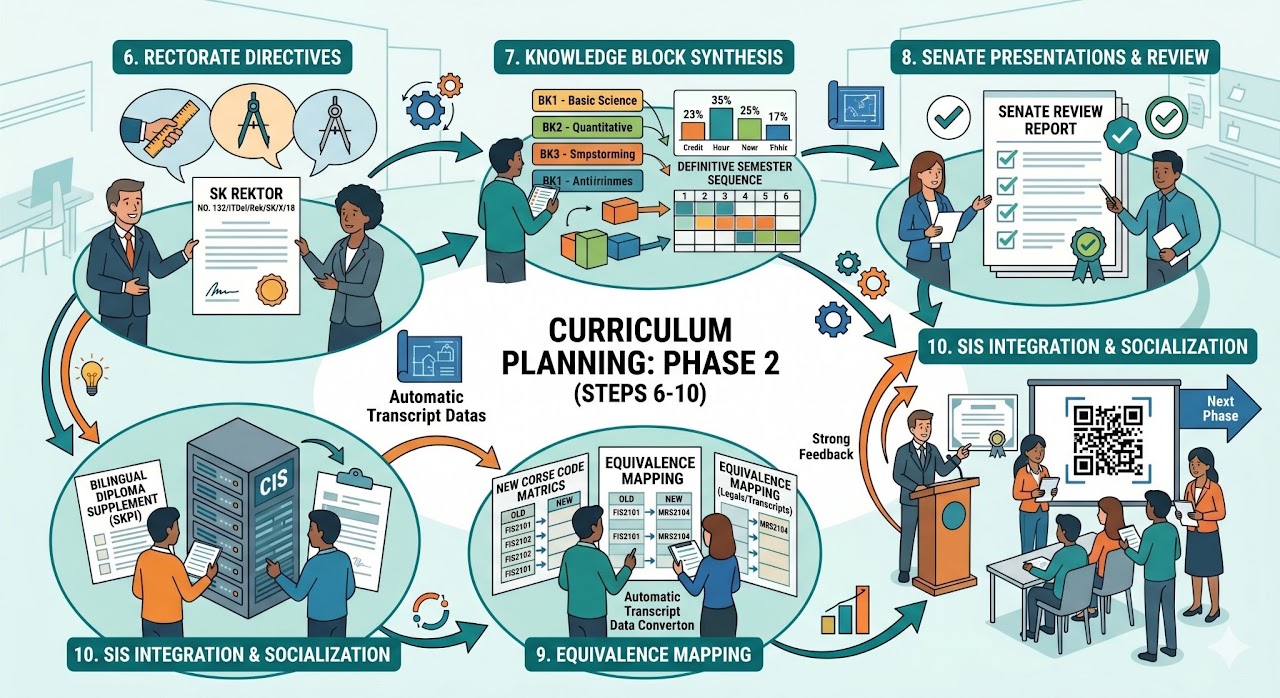
The synthesis phase converted those inputs into eight knowledge blocks forming a 144-credit, eight-semester sequence. After peer review and Academic Senate approval, course-equivalency matrices protected student progress, while the curriculum was automated in the Campus Information System and deployed through bilingual diploma supplements.

10-step framework8 knowledge blocks144 credits8 semesters
Pre-Master Program with University of Amsterdam project visual 2
Pre-Master Program with University of Amsterdam project visual 3
Pre-Master Program with University of Amsterdam project visual 4
Project 09 · International Academic Pathway

Pre-Master Program with University of Amsterdam

IT Del – UvA partnership · Lead Faculty Lecturer, Strategy & Organization

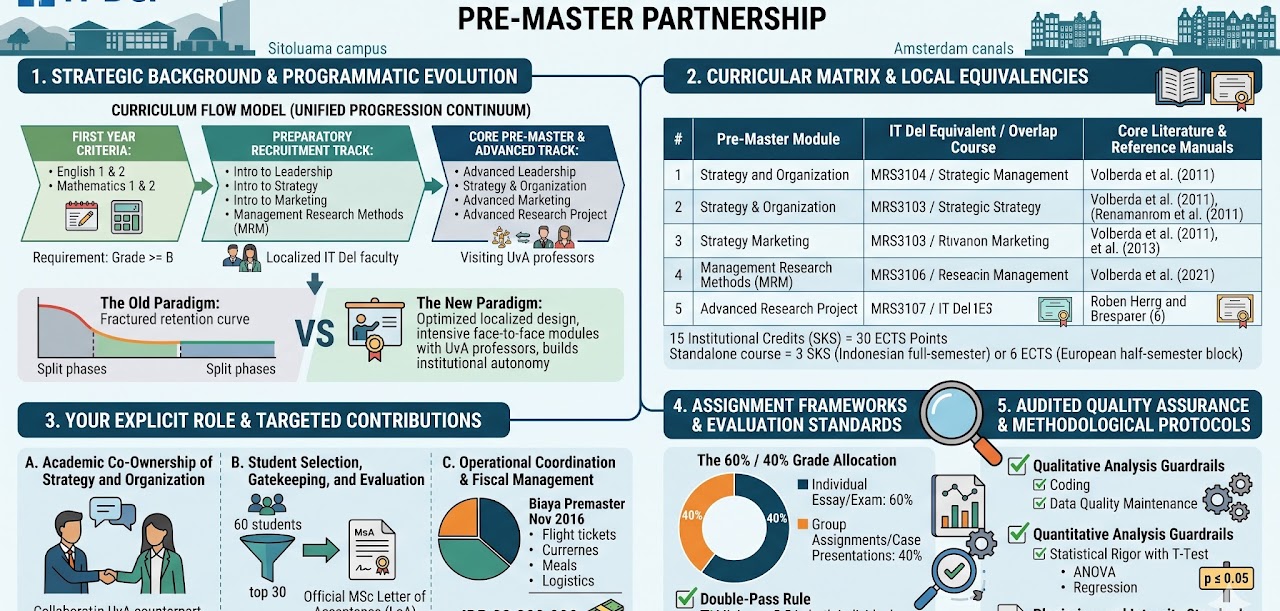
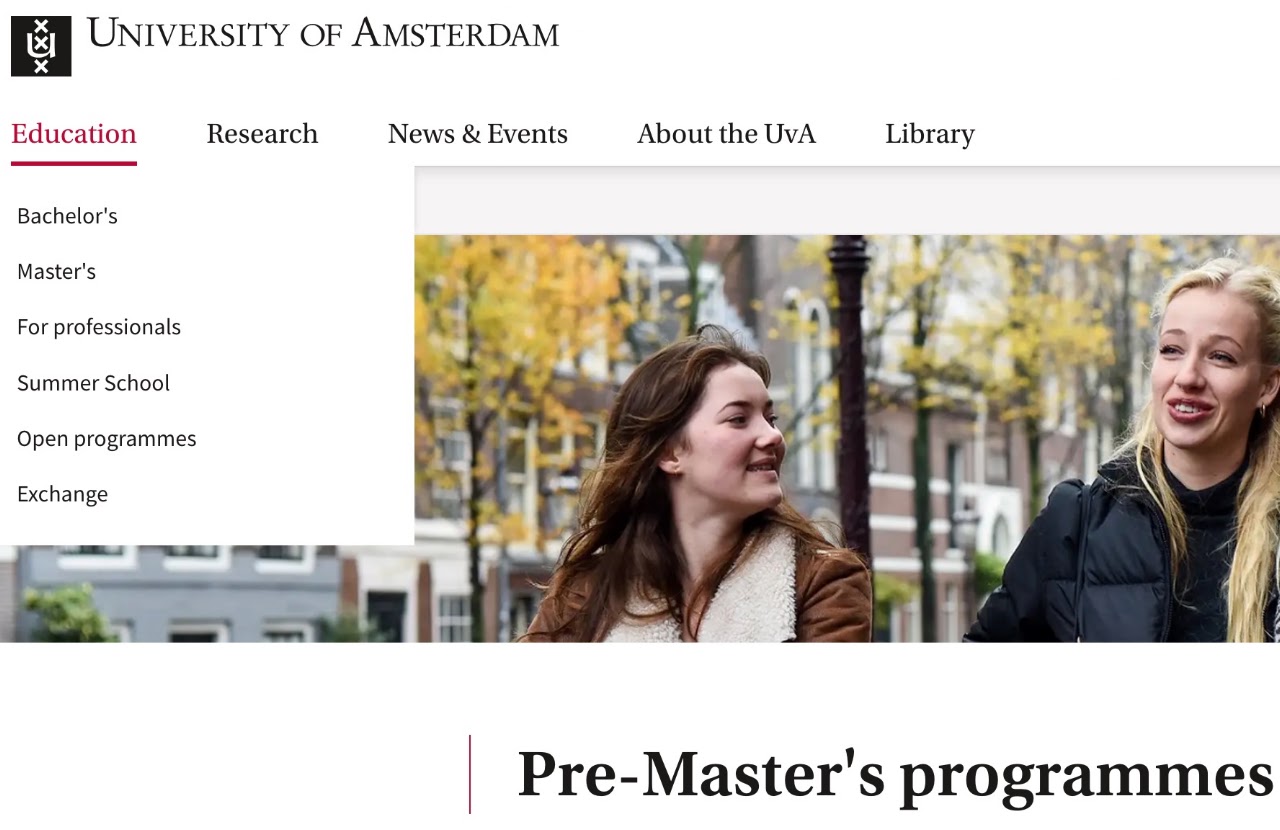
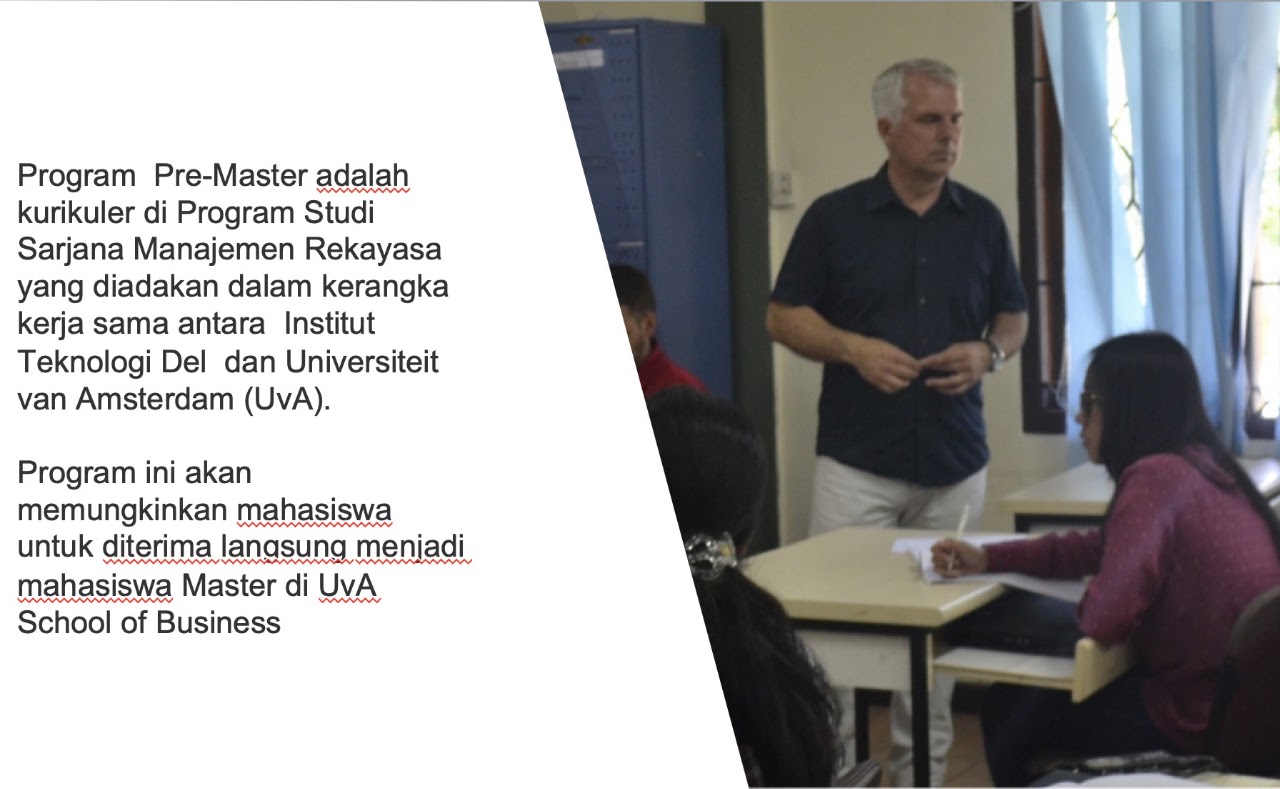
The partnership created a unified progression path preparing undergraduate engineering students from North Sumatra for European MSc study through a 15-credit (30 ECTS) sequence. Local faculty delivered foundational business and research topics, while advanced core modules were co-taught through intensive on-campus sessions with visiting UvA professors.

As Lead Faculty Lecturer for Strategy and Organization, I co-managed curriculum design, integrated Sumatran commercial cases into global strategy frameworks, facilitated seminars, served on the joint candidate-selection committee, and supported visiting-faculty logistics and budget allocation. Modules used a double-pass model requiring at least 5.5 in both individual exams and group project components.

15 credits / 30 ECTSUvA partnershipDouble-pass assessment5.5 minimum
Logistics Competency Workshop project visual 1
Logistics Competency Workshop project visual 2
Logistics Competency Workshop project visual 3
Logistics Competency Workshop project visual 4
Project 10 · Competency Strategy

Workshop on the Role of Logistic Competencies

Curriculum strategy · Logistics education

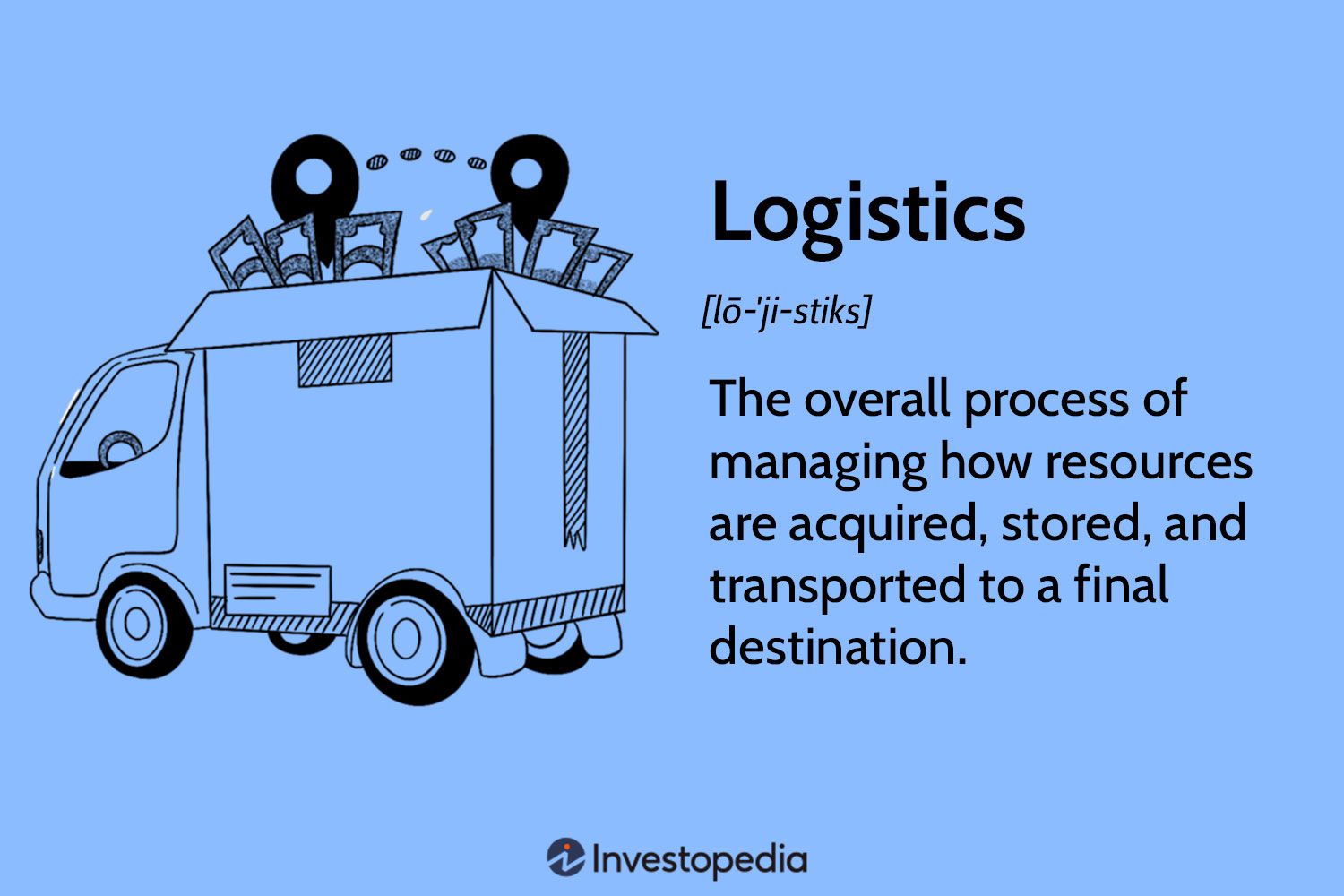
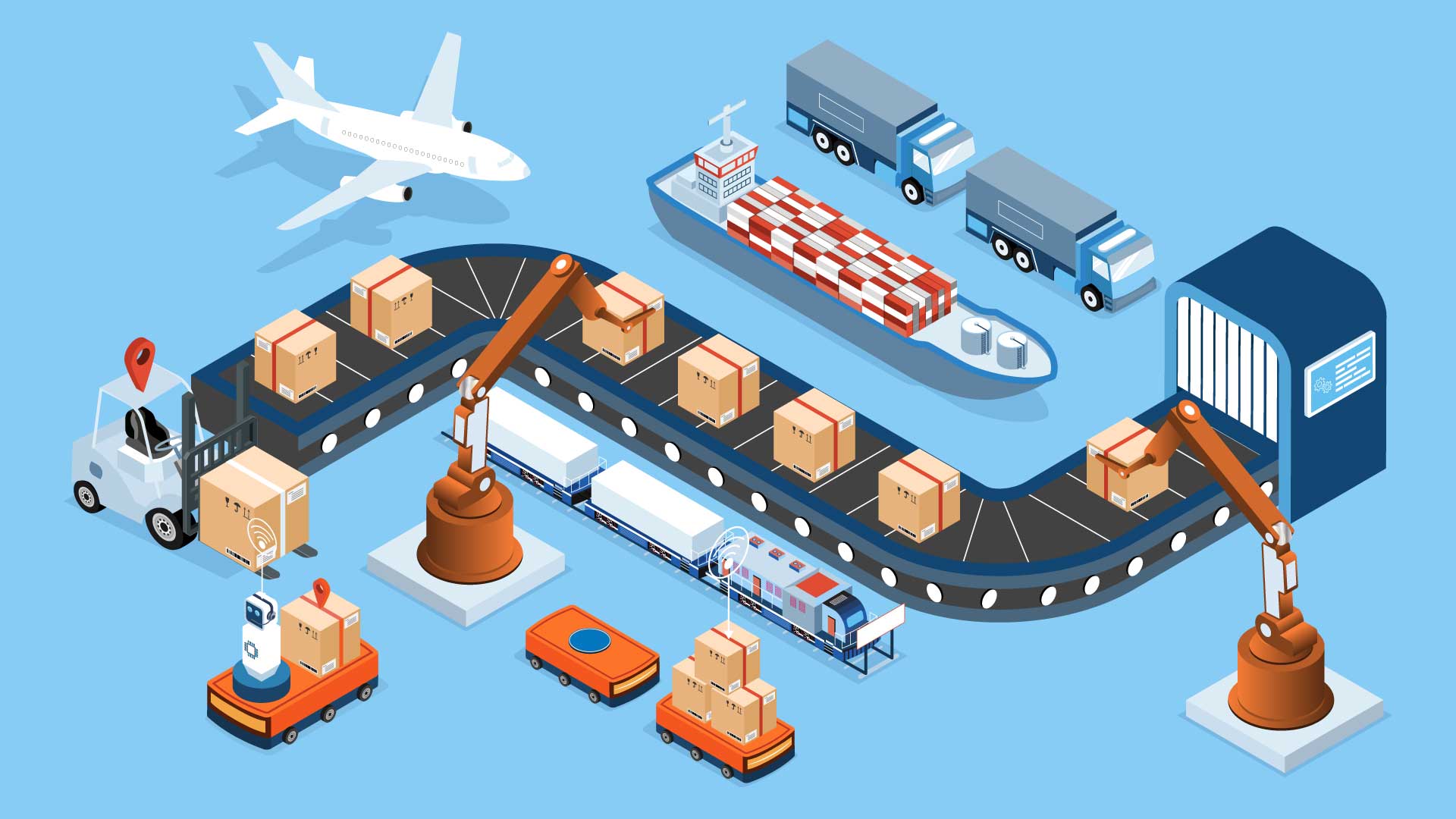
The project developed an integrated blueprint for restructuring higher-education logistics programs around AI-enabled supply-chain networks. The strategy treats competitive advantage as a network problem, requiring coordinated movement of physical goods, capital, and data rather than isolated optimization of individual enterprises.

The framework bridges higher-education regulation with KKNI and SKKNI standards, distinguishes logistics-engineering and logistics-management pathways, and integrates emerging technologies such as causal reinforcement learning, machine learning, and systems-driven risk management into future-facing academic preparation.

KKNI / SKKNIAI-enabled supply chainsMLSystems risk
UGRAD Exchange Program project visual 1
UGRAD Exchange Program project visual 2
UGRAD Exchange Program project visual 3
UGRAD Exchange Program project visual 4
Project 11 · Student Development

UGRAD Exchange Program to USA

Global UGRAD · Student mentoring & institutional support

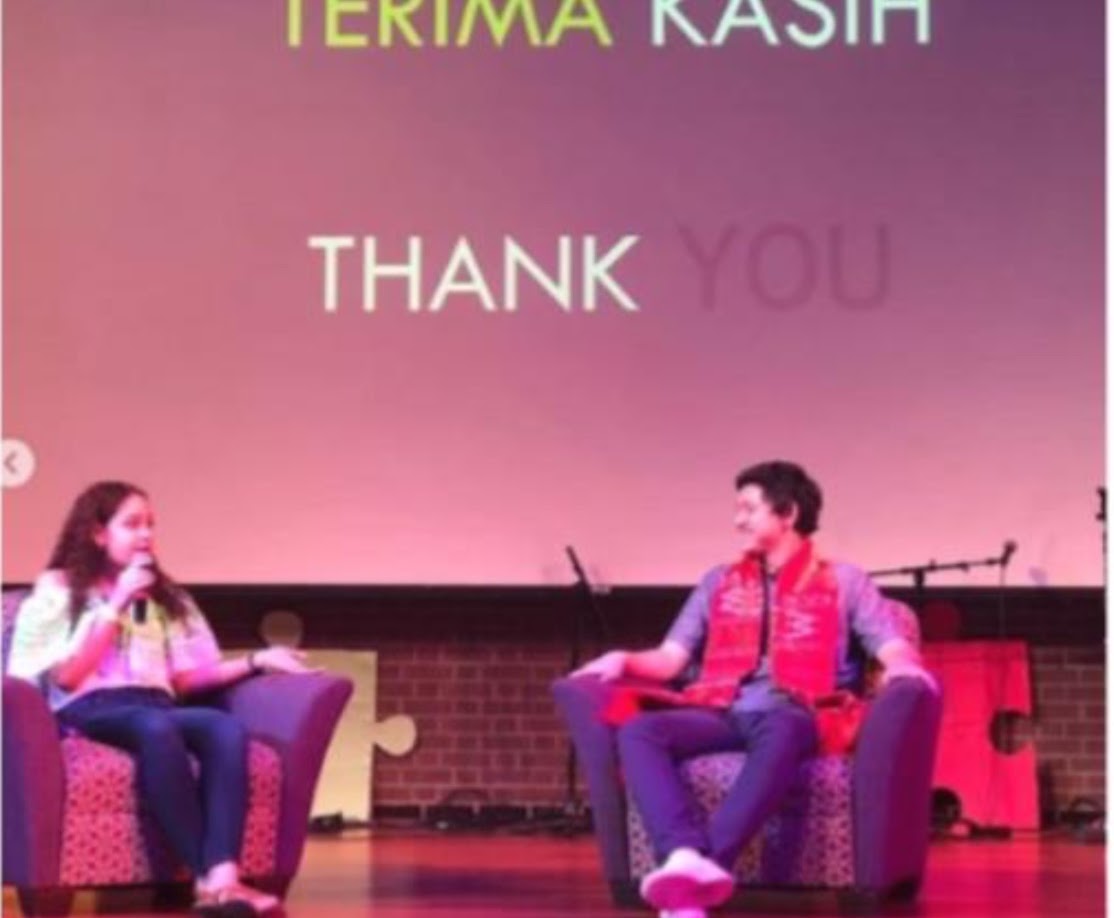
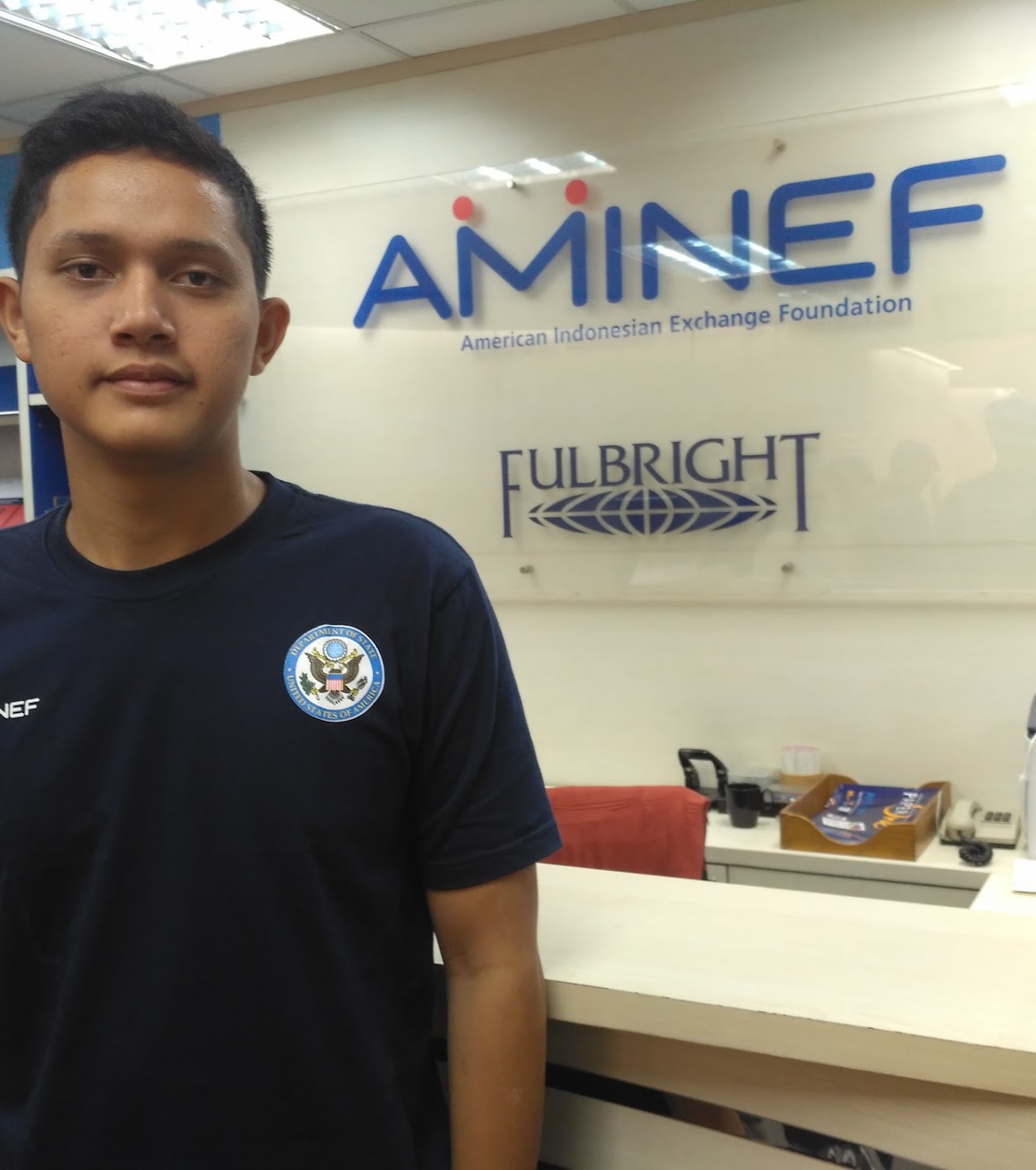
Global UGRAD offers emerging student leaders a fully funded semester of non-degree undergraduate study in the United States. My faculty-support role focused on strengthening student readiness for the competitive selection process and coordinating the institutional steps required to back candidates.

The support model included endorsement meetings with university leadership, intensive mock interviews, targeted English-proficiency preparation materials, and formal recommendation letters documenting candidates' academic performance and community leadership potential.

Mock interviewsEnglish preparationLeadership endorsementRecommendation letters
Engineering Management Accreditation project visual 1
Engineering Management Accreditation project visual 2
Project 12 · Quality Assurance

Accreditation of Engineering Management

BAN-PT · Secretary of Study Program & Accreditation Task Force Chair

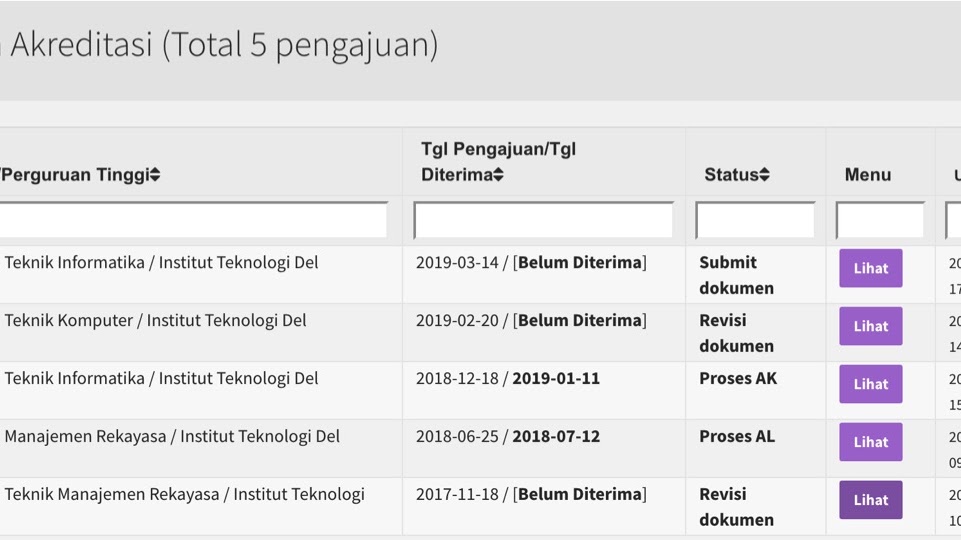
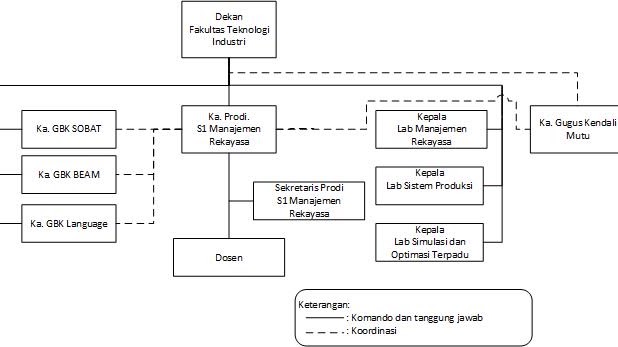
Under the Dean's decree, I directed multi-departmental accreditation work across preparation, visitation, and post-evaluation. Responsibilities included coordinating and validating Buku IIIA, Buku IIIB, and the self-evaluation book; authoring Standard 2 on governance and quality assurance; co-authoring Standard 5 on the 144-credit curriculum map; drafting the strategic plan; and serving as the operational liaison during field assessment.

After the audit, I coordinated refinement across 16 campus entities, embedded Plan-Do-Check-Action monitoring into academic and support workflows, and worked with IT, library, maintenance, and learning-infrastructure teams on continuous quality improvement. The process advanced the program through the SAPTO accreditation pipeline from desk assessment into field assessment.

3 core accreditation books16 campus entitiesPDCA / CQI144-credit map
Capstone Project project visual 1
Capstone Project project visual 2
Capstone Project project visual 3
Capstone Project project visual 4
Capstone Project project visual 5
Project 13 · Capstone Learning Design

Capstone: Engineering Project Design & Business Feasibility

Institut Teknologi Del · Co-author, lecturer & group advisor

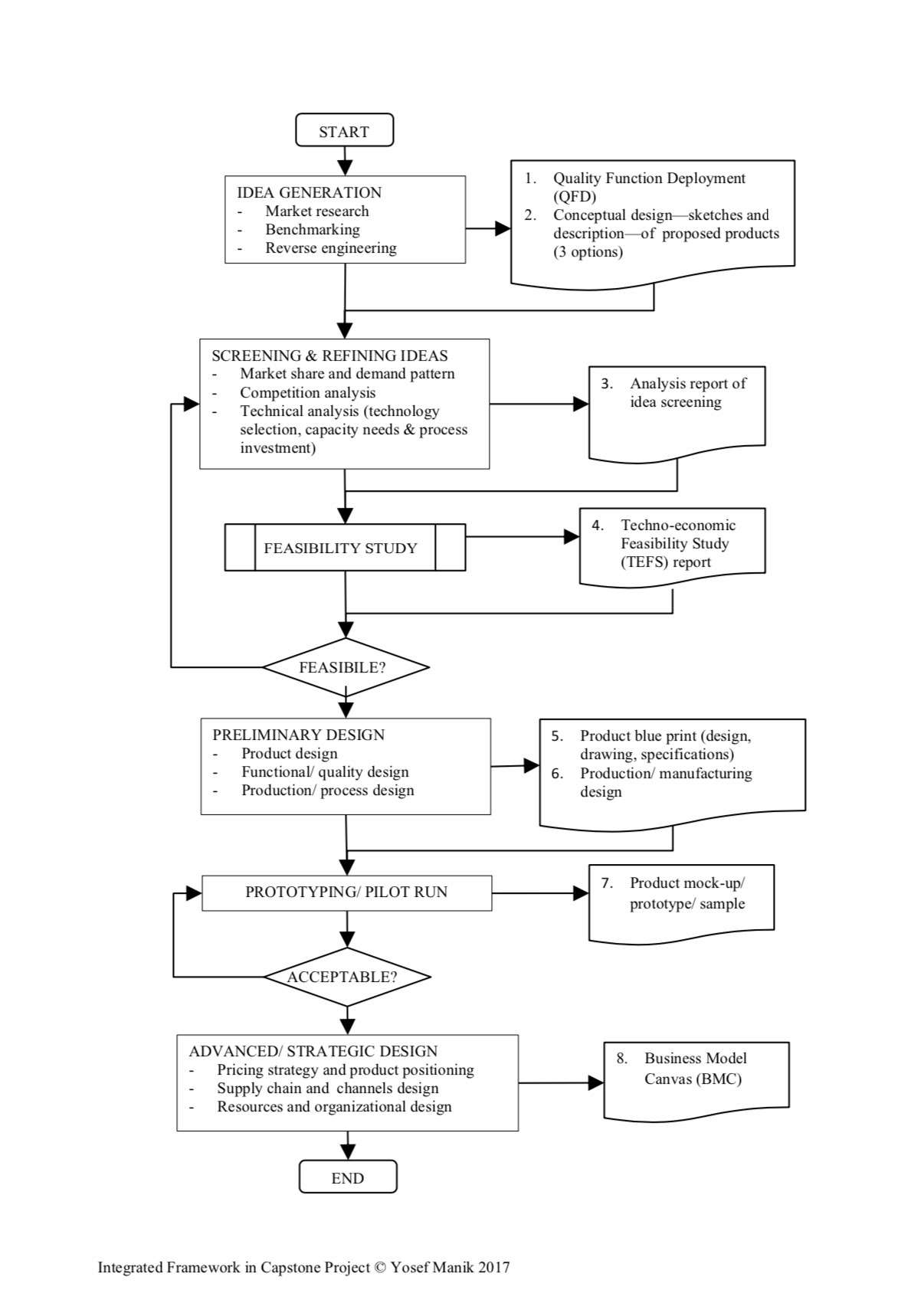
As a co-author of the 2018 capstone handbook, I helped develop a structured 17-week framework integrating technical engineering design with business feasibility and strategic planning. As an instructor, I led Idea Generation through market research, benchmarking, and ideation challenges, and taught functional and quality-attribute design.

As a group advisor, I supervised student teams across the end-to-end development workflow from early blueprinting and prototyping through techno-economic evaluation and Business Model Canvas formulation, connecting engineering decisions with commercial viability.

17-week frameworkIdea generationPrototypingTechno-economic evaluation

Contact

For Learning & Development, learning systems, curriculum strategy, instructional design, or research collaboration.